
Just One Thing is a series where I take a single idea from a book that stuck with me and sit with it for a while. Not a summary. Not a review. Just one concept that feels useful, durable, and worth experimenting with. The aim isn’t to slow down and look closely at one thing that might actually change how you think or act. This first piece starts with an idea from the book Atomic Habits that keeps resurfacing for me: that lasting habit change isn’t really about discipline or systems—it’s about identity.
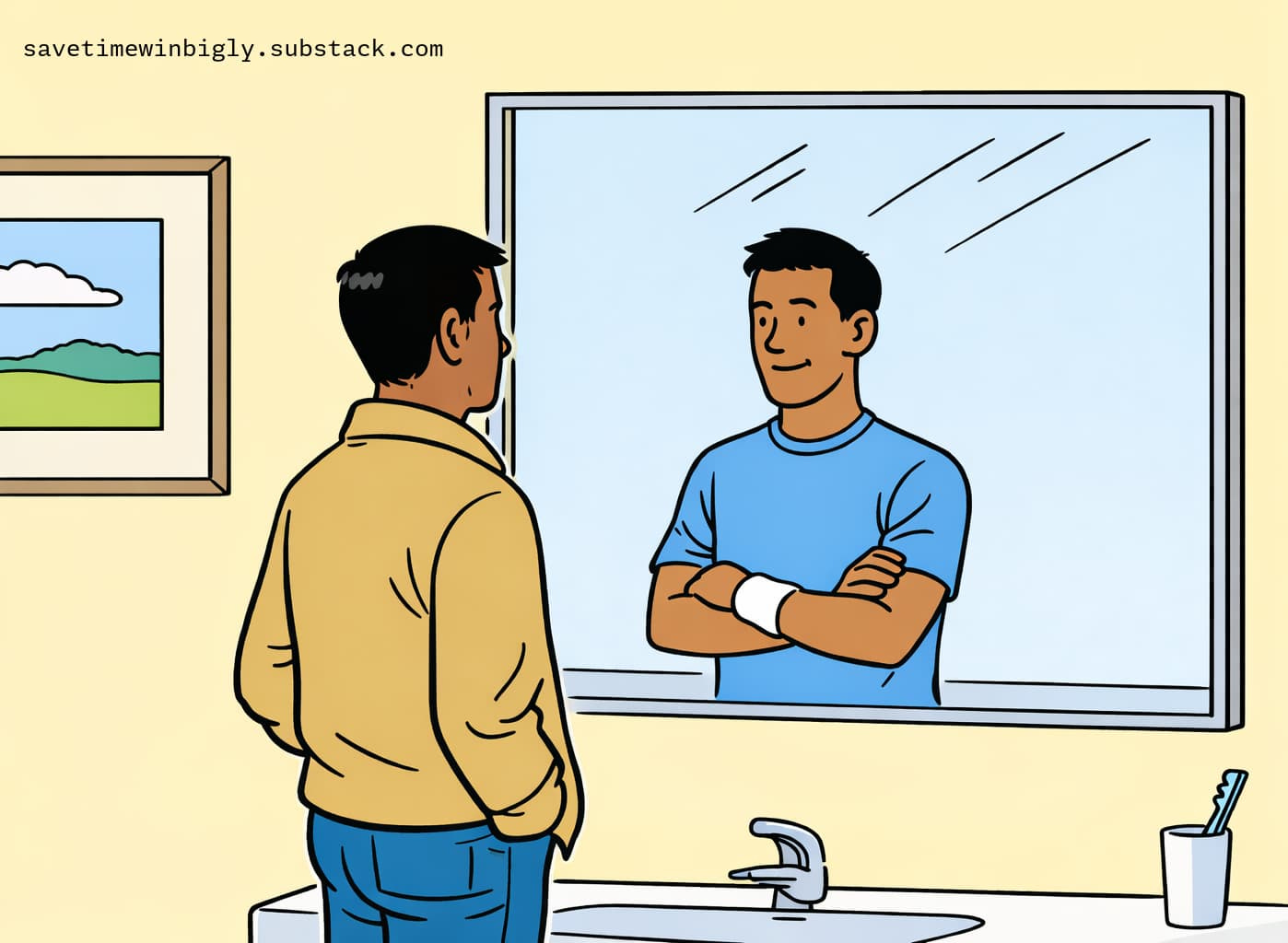
Why lasting change starts with who you believe you are
In Atomic Habits, James Clear makes a deceptively simple claim: the most effective way to change your habits is to change your identity.
At first glance, this sounds like motivational fluff. Identity feels abstract. Habits feel concrete. One is philosophical; the other is practical. Surely we should focus on behavior, not self-image?
Clear’s insight is that this distinction is false. Behavior and identity are not separate layers. They form a feedback loop. And if you want change that lasts, you have to work at the level of identity.
The three layers of change
Clear describes behavior change as operating on three levels:
Outcomes – what you get (lose weight, publish a book, finally match your LinkedIn profile)
Processes – what you do (exercise, write daily, buy a $47 course on “habit stacking” )
Identity – who you believe you are (a healthy person, a writer, someone who absolutely does NOT scroll Reddit/Instagram at 11 PM on a Tuesday)
Most people start from the outside in. They focus on outcomes. I want to lose 10kg. Or processes. I need a better system.
But lasting change happens from the inside out.
If your identity remains unchanged, any behavioral change will feel fragile. You are relying on willpower to act against your self-image. Eventually, the old identity reasserts itself.
A man who understood this before it had a name
Benjamin Franklin didn’t try to “improve his habits.” He decided who he wanted to be.
In his twenties, Franklin realized that although he was clever and ambitious, he was also argumentative and hard to like. Rather than asking how to behave better, he asked a more dangerous question: What kind of man am I becoming?
He wrote down thirteen virtues—industry, humility, temperance—and tracked them daily in a small notebook. Each day came down to one test: did his actions align with the person he claimed to be?
Franklin wasn’t chasing perfection. He was collecting evidence.
By changing how he spoke, argued, and showed up—one small behavior at a time—he gradually reshaped how he saw himself. People responded differently. Trust grew. Influence followed.
Long before habit science had language for it, before it could be monetized into a TED Talk, Franklin understood the principle at work: identity isn’t declared once; it’s reinforced daily through action.
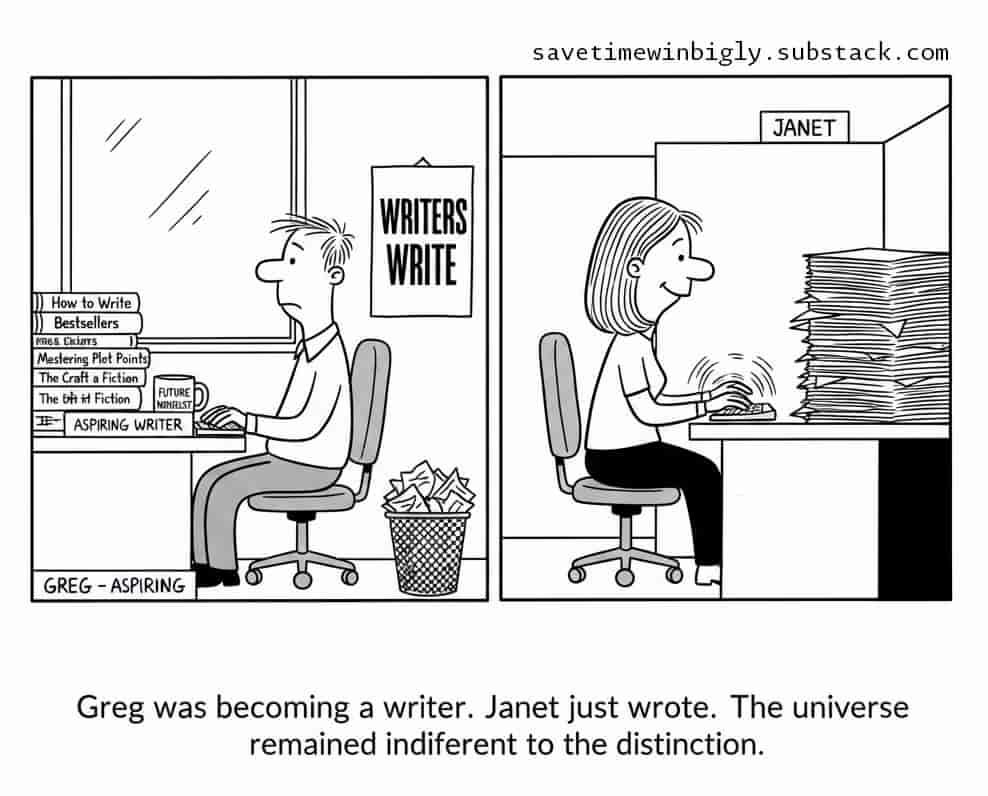
Why habits stick—or don’t
Consider the difference between these two statements:
“I’m trying to quit smoking.”
“I am not a smoker.”
The behavior may look the same in the moment. The identity is not.
In the first case, the habit is provisional. The person still sees themselves as a smoker exerting effort. In the second, behavior flows naturally from self-image. There is no internal debate.
This is why so many habit changes collapse. People attempt to graft new behaviors onto old identities.
They want to eat like a healthy person, work like a focused professional, create like an artist—while still believing they are undisciplined, inconsistent, or “not that kind of person.”
Every action then feels like an exception rather than an expression of self.
It’s exhausting. And it doesn’t work.
Identity is not a vision board. It’s a court case, and you’re the jury.
Not aspiration—it’s evidence
Identity change is not about affirmations or positive thinking.
You change your identity by announcing it. You change identity by proving it—to yourself.
Every small habit leaves a trace:
Writing one paragraph reinforces “I’m someone who writes”
Going for a short walk reinforces “I’m someone who moves”
Reading one page reinforces “I’m someone who learns”
No single action defines you. But over time, repetition hardens belief.
This reframes habits from a self-improvement project into a self-construction process. You’re not chasing outcomes; you’re building credibility with yourself.
The only kind of motivation that survives contact with reality
Outcome-based motivation is brittle. When progress slows or life intervenes, it collapses.
Identity-based motivation is more durable.
When behavior is tied to identity, the question shifts from “Do I feel like doing this?” to “What does someone like me do next?”
This matters most after a lapse.
If habits are outcome-driven, a slip feels like failure. If habits are identity-driven, a slip is just a data point.
A writer who misses a day doesn’t conclude, “I’m not a writer.” They conclude, “I missed a day.”
The story remains intact.
The trap of becoming your own helicopter parent
The risk of rigid identities
Identities can become brittle if they depend on perfection. If your self-image is “I never miss”, then a single miss threatens the whole structure.
The healthier approach is a flexible identity anchored in process, not performance.
Not: “I am productive.” But: “I am someone who shows up consistently, even imperfectly.”
Identity should stabilize behavior, not punish it.
The better starting question
If habit change is identity change, the question shifts from “What do I want to achieve?” to:
Who do I want to become—and what is the smallest action that reinforces that identity today?
Not tomorrow. Not perfectly. Just once.
Then again.
And again.
Identity isn’t something you discover. It’s something you build.